
.svg)

.svg)


Lepta MMA
Resin parameters
Chemical resistance
Resin description
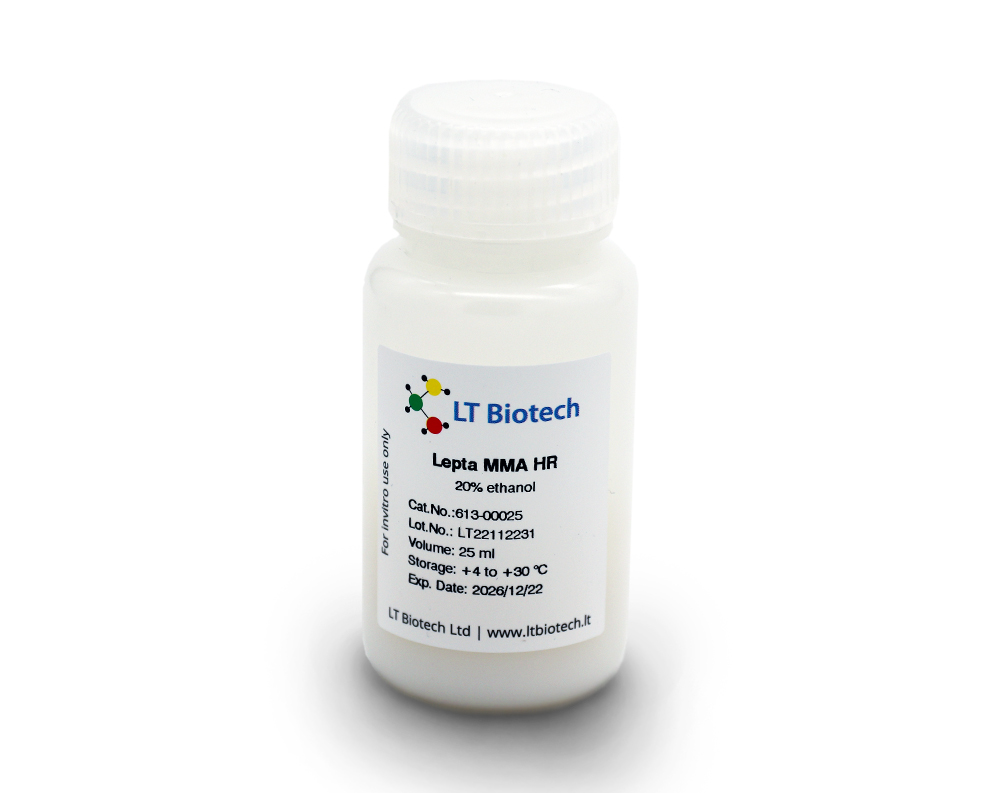
Lepta MMA is a modified agarose-based MMC resin. Different from traditional ion exchange chromatography resin, it is composed of multiple groups with different properties: amino groups, hydrogen bonds and hydrophobic groups. The chromatographic resin can remove major impurities such as nucleic acid, host protein, aggregates and viruses, and is widely used in the fields of polysaccharides, antibodies, viral vectors or vaccines. Compared with traditional single-mode chromatography resin, Lepta MMA shows better performance:
(1) It has high dynamic capacity, combining with most impurities in one step, saving time and cost.
(2) The improved Lepta base frame is more rigid, so it can achieve higher process flow rate at lower back pressure and improve process efficiency.
(3) It can tolerate a wide range of pH and conductivity, which is helpful to explore the optimal process conditions.
Method of use
Chromatographic conditions
- Buffer selection: a buffer salt whose buffer group does not interact with the chromatographic resin should be selected. If the binding and elution mode is used, the equilibration buffer should be a low pH (usually 1 pH unit lower than the isoelectric point of the target molecule) to facilitate the binding of the target molecule. Consider the stability of the sample in the buffer; the elution buffer is usually a buffer with a high concentration of salt (such as 1M NaCl) added to the equilibration buffer. If the flow-through mode is used, the equilibration buffer should adopt conditions that are conducive to the binding of impurities. After the target molecule has completely flowed through, it should be washed directly with high-concentration salt.
- Flow rate: generally, choose a linear flow rate of 90–500 cm/h according to the bed height of the column.
- Sample pretreatment: to prevent the sample from clogging the column, the sample needs to be filtered with a 0.45 μm microporous membrane before loading. It is recommended that the pH and conductivity of the sample is adjusted to be consistent with the equilibrium buffer (dilution, ultrafiltration can be used and desalting to adjust the pH and conductivity of the sample).
Chromatography steps
- Equilibration: use equilibration buffer to fully equilibrate the chromatography column until the pH and conductivity are stable and basically consistent with the equilibration buffer. This step usually requires 3–5 column bed volumes (CV).
- Sample loading*: according to the binding capacity measured in the small test, determine the sample loading volume and loading amount of the sample on Lepta MMA.
- Impurity washing*: use equilibration buffer or other suitable buffer to wash the chromatography column until the UV stabilizes and returns to the baseline.
- Elution*: elution is achieved by increasing the concentration of salt ions. The concentration of salt ions in the eluent can be gradually increased through a linear gradient or a step gradient to elute molecules with different binding strengths. pH gradient elution or mixed elution can also be used.
- Regeneration: rinse the column with a high-salt buffer (such as 2M NaCl).
- Re-equilibration: re-equilibrate the column with equilibration buffer.
* Note: If the flow-through mode is used, the sample loading step should be set to collect; the washing step should ensure that the target molecules have completely flowed through, then the collection can be stopped; the elution step should directly use high-salt buffer, and impurities can be washed away.
Cleaning and regeneration
Contaminants (e.g. lipids, endotoxins and proteins) accumulate on the column as the number of uses of the chromatography resin increases. Determine the frequency of CIP according to the degree of contamination of the chromatography resin (if the contamination is considerable, CIP is recommended after each use to ensure repeatability of results and to prolong the working life of the chromatography resin). For different types of impurities and contaminants, the recommended cleaning conditions are as follows:
- Removal of strongly binding proteins: wash with 5 CV of 2M NaCl solution or use a high salt buffer not lower than pH 2, such as 1M NaAc solution.
- Removal of strongly hydrophobic proteins and precipitated proteins: first wash with 5 CV of 1M NaOH solution, then wash the lye with 5–10 CV of ultra pure or pure water.
- Removal of lipoproteins and lipids: first wash with 5 CV of 70% ethanol or 30% isopropanol, then rinse with 5–10 CV of ultra pure or pure water.
Note: 70% ethanol or 30% isopropanol should be degassed before use; the flow rate should be 30–60 cm/h during CIP; reverse cleaning should be used when the clogging is severe. To reduce the microbial load, it is recommended that 0.5~1M NaOH solution is used to treat the chromatography resin for 15~30 minutes.
Storage
Keep the unopened chromatography resin in the original container and store at 4~30°C in a well-ventilated, dry and clean place. Do not freeze. Wash the used column with 2–3 CV of 20% ethanol solution and store at 2~8°C.
Destruction and recycling
Since chromatography resin is difficult to degrade in nature, it is recommended that the waste chromatography resin is incinerated to protect the environment. For chromatography resin that has been in contact with biologically active samples such as viruses and blood, follow the local biosafety requirements before destroying or disposing of it.
Packing method
Detailed information on resin packaging is available on request. Please contact your local distributor.